- Home
- About Us
- Industry
- Services
- Reading
- Contact Us
Dehydrated Culinary Herbs Market: Current Analysis and Forecast (2025-2033)
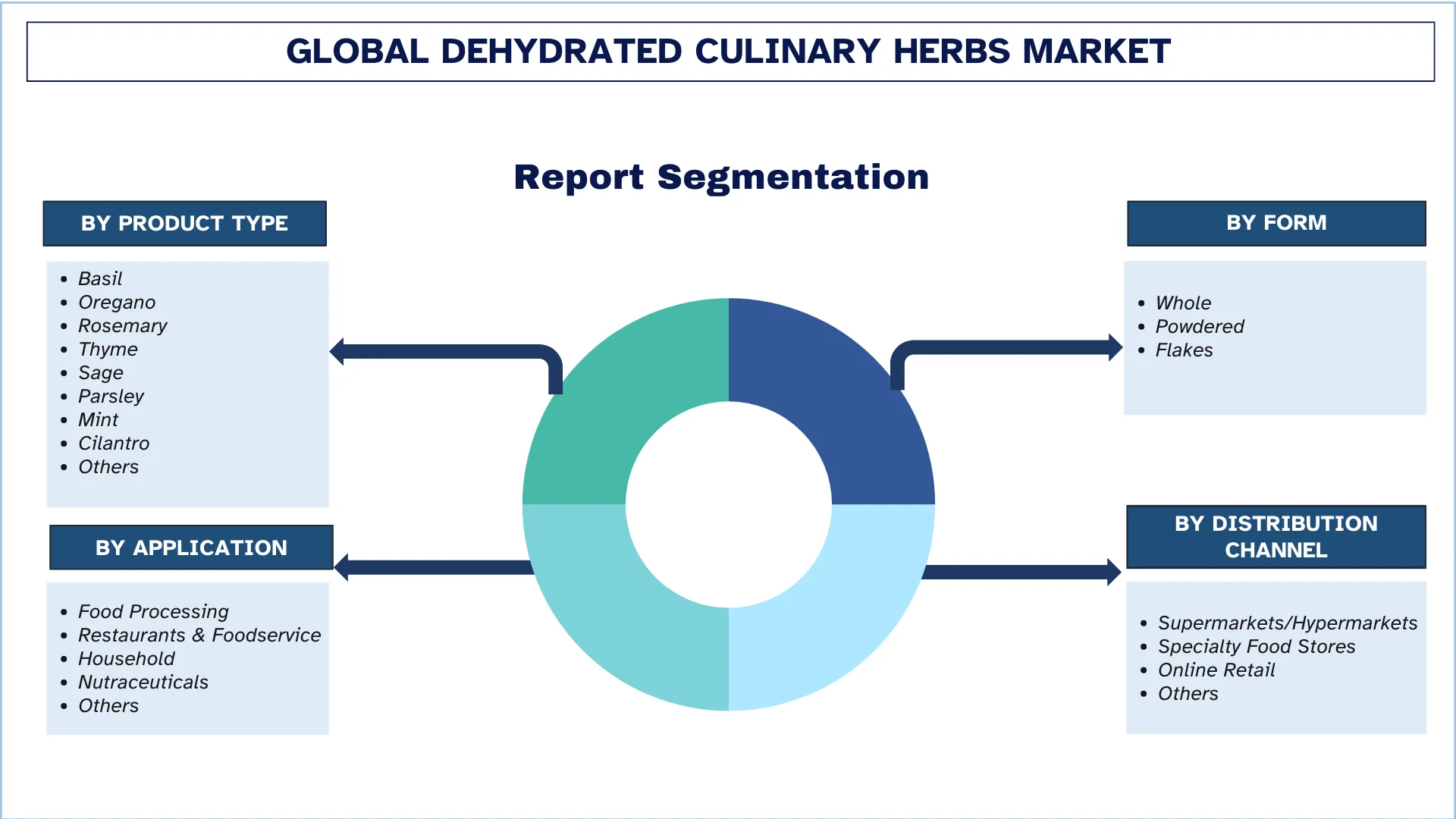
Emphasis on Product Type (Basil, Oregano, Rosemary, Thyme, Sage, Parsley, Mint, Cilantro, and Others); Form (Whole, Powdered, and Flakes); Application (Food Processing, Restaurants & Foodservice, Household, Nutraceuticals, and Others); Distribution Channel (Supermarkets/Hypermarkets, Specialty Food Stores, Online Retail, and Others); and Region/Country
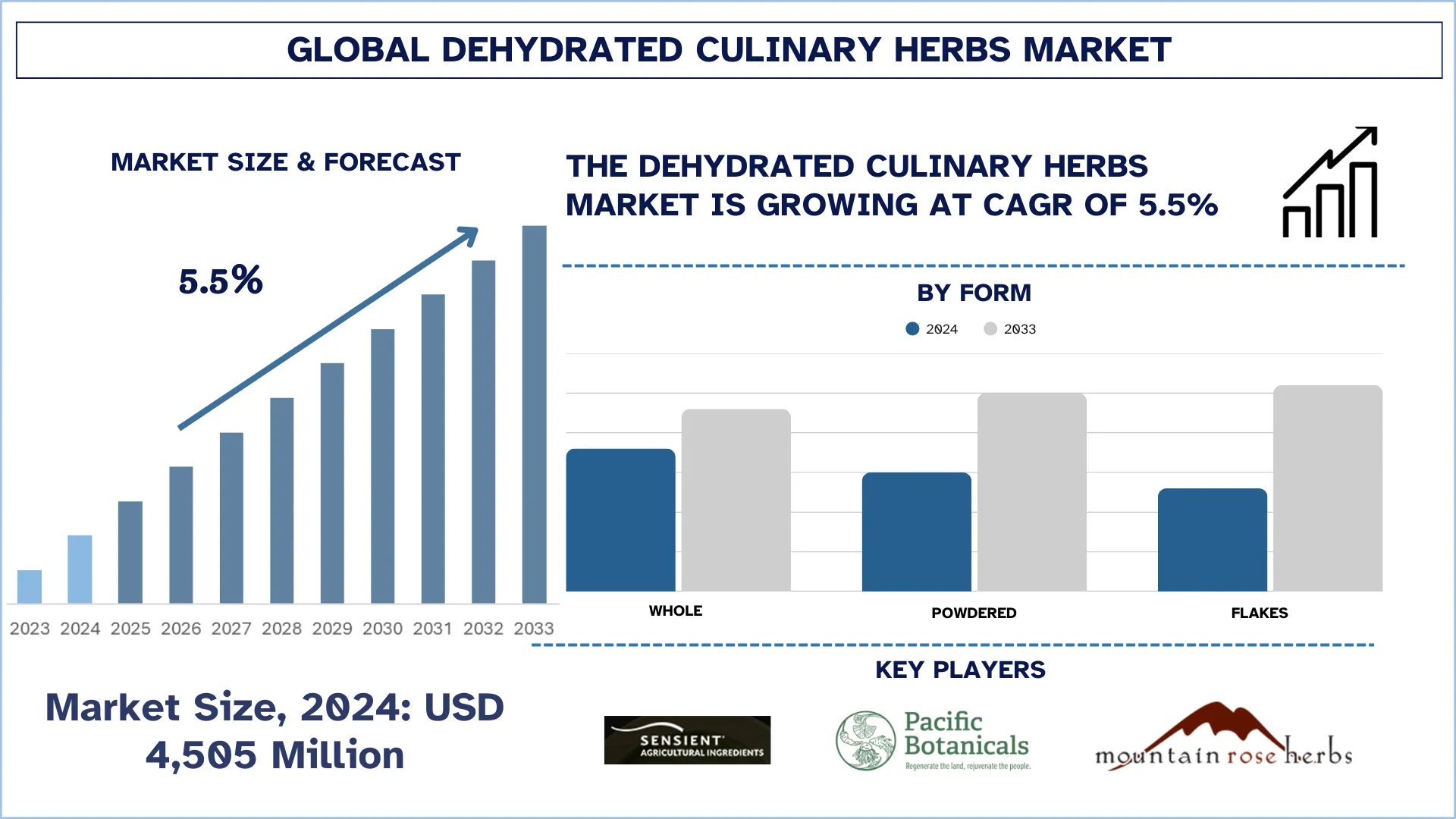
Global Dehydrated Culinary Herbs Market Size & Forecast
The global dehydrated culinary herbs market was valued at USD 4,505 million in 2024 and is expected to grow at a strong CAGR of around 5.5% during the forecast period (2025-2033F), driven by increasing consumer demand for convenient, long-shelf-life ingredients that retain flavor and nutrition.
Dehydrated Culinary Herbs Market Analysis
Dried culinary herbs are the Fresh herb leaves, stems, or aerial portions of the plant that have been subjected to controlled drying to eliminate moisture without altering the natural flavor, aroma, color, and nutritional values of the herbs. The dehydrated culinary herbs market is expanding owing to the altered consumer lifestyle that causes convenience, prolonged shelf life, and convenient cooking materials. Emerging trends of cooking at home, world cuisines, and ready-to-eat foods have enhanced the need for constant and tasty seasonings. The dehydrated herbs are also favored by food manufacturers and foodservice operators due to their cost-effectiveness, stability during storage, and less wastage as compared to fresh herbs.
Global Dehydrated Culinary Herbs Market Trends
This section discusses the key market trends that are influencing the various segments of the global dehydrated culinary herbs market, as found by our team of research experts.
Rising Popularity of Ethnic and Fusion Cuisines
The increased acceptance of ethnic and fusion foods is becoming a major trend in the dehydrated culinary herbs market, as consumers are increasingly interested in exploring the flavors of different cultures. Mediterranean, Asian, Middle Eastern, and Latin American cuisines are based on the herbs (oregano, basil, cilantro, thyme, and rosemary), and this factor is one of the reasons why dehydrated versions are in demand. Fusion cooking, the combination of traditional tastes with new methods, extends the use of herbs in recipes even more. Food manufacturing companies and restaurants are also using dehydrated herbs in seasoning mixes and pre-cooked dishes to deliver the same flavor and ensure consistency, convenience, and extended shelf life.
Dehydrated Culinary Herbs Industry Segmentation
This section provides an analysis of the key trends in each segment of the global dehydrated culinary herbs market report, along with forecasts at the global, regional, and country levels for 2025-2033.
The Oregano Segment Dominates the Global Dehydrated Culinary Herbs Market
Based on the product type category, the market is categorized into basil, oregano, rosemary, thyme, sage, parsley, mint, cilantro, and others. Among these, oregano has the largest market share in the dehydrated culinary herbs market because of its wide application in the Italian, Mediterranean, and fast-food culinary markets, with the main applications being in pizza, pasta, sauces, and seasoning blends in the household and foodservice markets. Its dominance is further enhanced by its high demand among the manufacturers of processed foods and the fast-food restaurants. However, the basil segment is expected to witness the fastest growth due to the growing demand for fresh-inspired flavors, growing popularity of Mediterranean and fusion dishes, and growing applications in ready-to-eat food, sauces, and high-end seasoning blends.
The Food Processing Segment Dominates the Global Dehydrated Culinary Herbs Market.
Based on the application category, the market is segmented into food processing, restaurants & foodservice, household, nutraceuticals, and others. Among these, the food processing has the highest market share within the dehydrated culinary herbs market, because the consumption of herbs within the packaged foods, ready meals, sauces, soups, snacks, and seasoning mixes is vast. Manufacturers of food like herbs find it more convenient to use dehydrated herbs due to their uniform quality, extended shelf life, and affordability when produced on a large scale. However, the restaurants & foodservice segment is expected to experience strong growth, as the number of quick-service restaurants, cloud kitchens, and global cuisine will grow. Future growth in this segment is driven by increasing demand for standardized flavours, ease of operations, and less food wastage in commercial kitchens.
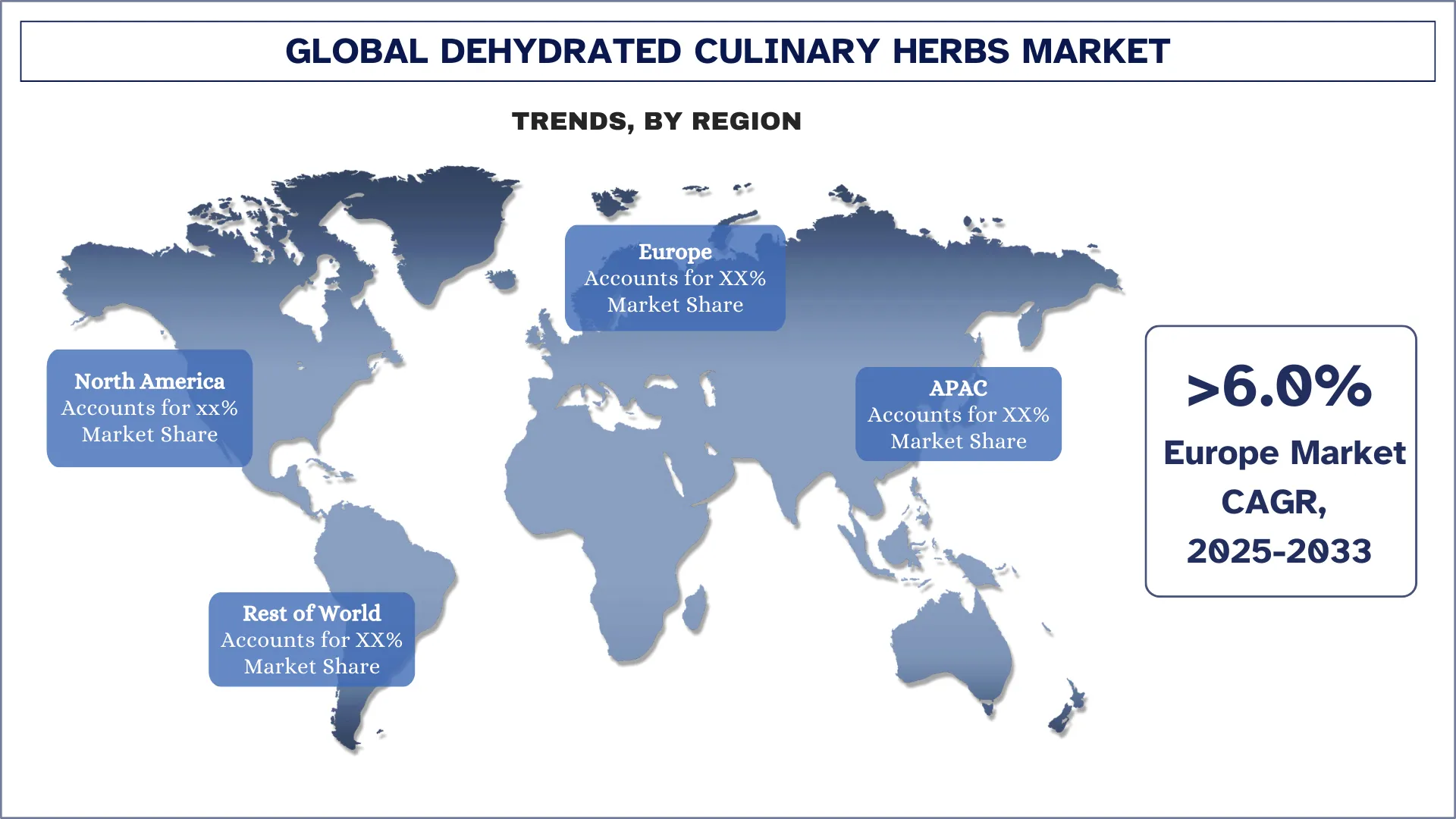
Europe holds the largest market share in the Global Dehydrated Culinary Herbs market
Europe holds the largest market share in the global dehydrated culinary herbs market because of its great culinary tradition and the extensive application of the herbs in households, restaurants, and food production. Herbs like oregano, basil, thyme, rosemary, and parsley are widely used in the European cuisines, especially Mediterranean and Western European, which generates constant demand. It also has a well-established food processing sector where dehydrated herbs are widely used in packaged foods, sauces, and seasoning blends. Also, consumer knowledge of natural and clean-label ingredients, along with the well-established retail distribution channels, further contributes to the European market dominance.
Italy held a Dominant share of the Europe Dehydrated Culinary Herbs Market in 2024
Italy had the largest market share in the Europe dehydrated culinary herbs market. This is owed to the long culinary tradition and also to the high use of herbs in both the traditional and modern cuisines. The dehydrated herbs common in Italian cooking include oregano, basil, rosemary, and thyme. Moreover, the high food packaging sector in the country also contributes to the high market demand for dehydrated herbs. In addition, the high demand is also supported by the well-developed retail infrastructure and the fact that Italians prefer natural and authentic flavoring ingredients, which also makes Italy remain a leading market.
Dehydrated Culinary Herbs Industry Competitive Landscape
The global dehydrated culinary herbs market is competitive, with several global and international market players. The key players are adopting different growth strategies to enhance their market presence, such as partnerships, agreements, collaborations, geographical expansions, and mergers and acquisitions.
Top Dehydrated Culinary Herbs Market Companies
Some of the major players in the market include Sensient Technologies Corporation, Pacific Botanicals, Mountain Rose Herbs, UK Blending Ltd., Freeze-Dry Foods GmbH, BOS Natural Flavors (P) Limited, Van Drunen Farms, British Pepper & Spice Company, Silva International, Inc., and Bowlander Ltd.
Recent Developments in the Dehydrated Culinary Herbs Market
In February 2025, Belgian private-equity firm Gimv acquired a majority stake in The Spice Factory (TSF) from Gilde Equity Management and Davy De Muyer, positioning the Benelux-based herbs and spices leader for accelerated international growth and expanded private-label and foodservice offerings.
In January 2025, Midas Foods International acquired J.M. Exotic Foods, enhancing its culinary capabilities, expanding production and packaging reach, and aligning with its strategy to build a national manufacturing footprint in dry-blend sauces, seasonings, and specialty food products.
Global Dehydrated Culinary Herbs Market Report Coverage
Report Attribute | Details |
Base year | 2024 |
Forecast period | 2025-2033 |
Growth momentum | Accelerate at a CAGR of 5.5% |
Market size 2024 | USD 4,505 million |
Regional analysis | North America, Europe, APAC, Rest of the World |
Major contributing region | The Europe region is expected to dominate the market during the forecast period. |
Key countries covered | U.S., Canada, Germany, U.K., Spain, Italy, France, China, Japan, and India. |
Companies profiled | Sensient Technologies Corporation, Pacific Botanicals, Mountain Rose Herbs, UK Blending Ltd., Freeze-Dry Foods GmbH, BOS Natural Flavors (P) Limited, Van Drunen Farms, British Pepper & Spice Company, Silva International, Inc., and Bowlander Ltd. |
Report Scope | Market Trends, Drivers, and Restraints; Revenue Estimation and Forecast; Segmentation Analysis; Demand and Supply Side Analysis; Competitive Landscape; Company Profiling |
Segments Covered | By Product Type, By Form, By Application, By Distribution Channel, and By Region/Country |
Reasons to Buy the Dehydrated Culinary Herbs Market Report:
The study includes market sizing and forecasting analysis confirmed by authenticated key industry experts.
The report briefly reviews overall industry performance at a glance.
The report covers an in-depth analysis of prominent industry peers, primarily focusing on key business financials, type portfolios, expansion strategies, and recent developments.
Detailed examination of drivers, restraints, key trends, and opportunities prevailing in the industry.
The study comprehensively covers the market across different segments.
Deep dive regional level analysis of the industry.
Customization Options:
The global Dehydrated Culinary Herbs market can further be customized as per the requirements or any other market segment. Besides this, UnivDatos understands that you may have your own business needs; hence, feel free to contact us to get a report that completely suits your requirements.
Table of Content
Research Methodology for the Global Dehydrated Culinary Herbs Market Analysis (2023-2033)
We analyzed the historical market, estimated the current market, and forecasted the future market of the global dehydrated culinary herbs market to assess its application in major regions worldwide. We conducted exhaustive secondary research to gather historical market data and estimate the current market size. To validate these insights, we carefully reviewed numerous findings and assumptions. Additionally, we conducted in-depth primary interviews with industry experts across the dehydrated culinary herbs value chain. After validating market figures through these interviews, we used both top-down and bottom-up approaches to forecast the overall market size. We then employed market breakdown and data triangulation methods to estimate and analyze the market size of industry segments and sub-segments.
Market Engineering
We employed the data triangulation technique to finalize the overall market estimation and derive precise statistical numbers for each segment and sub-segment of the global dehydrated culinary herbs market. We split the data into several segments and sub-segments by analyzing various parameters and trends, including product type, form, application, distribution channel, and regions within the global dehydrated culinary herbs market.
The Main Objective of the Global Dehydrated Culinary Herbs Market Study
The study identifies current and future trends in the global dehydrated culinary herbs market, providing strategic insights for investors. It highlights regional market attractiveness, enabling industry participants to tap into untapped markets and gain a first-mover advantage. Other quantitative goals of the studies include:
Market Size Analysis: Assess the current and forecast market size of the global dehydrated culinary herbs market and its segments in terms of value (USD).
Dehydrated Culinary Herbs Market Segmentation: Segments in the study include areas of product type, form, application, distribution channel, and region.
Regulatory Framework & Value Chain Analysis: Examine the regulatory framework, value chain, customer behavior, and competitive landscape of the dehydrated culinary herbs industry.
Regional Analysis: Conduct a detailed regional analysis for key areas such as Asia Pacific, Europe, North America, and the Rest of the World.
Company Profiles & Growth Strategies: Company profiles of the dehydrated culinary herbs market and the growth strategies adopted by the market players to sustain the fast-growing market.
Frequently Asked Questions FAQs
Q1: What is the global dehydrated culinary herbs market’s current market size and growth potential?
As of 2024, the global dehydrated culinary herbs market is valued at USD 4,505 million. The market is expected to grow at a strong CAGR of 5.5% between 2025 and 2033, driven by rising demand for convenient cooking ingredients and clean-label seasonings.
Q2: Which segment has the largest share of the global dehydrated culinary herbs market by product type category?
Among various product types, dehydrated oregano accounts for the largest market share globally, owing to its widespread use in Mediterranean, Italian, and international cuisines.
Q3: What are the driving factors for the growth of the global dehydrated culinary herbs market?
Top growth drivers of the dehydrated culinary herbs market include:
• Increasing demand for convenient, ready-to-use cooking ingredients with extended shelf life
• Rising popularity of home cooking and international cuisines
• Growing consumer preference for natural, clean-label herbs and seasonings over artificial flavor enhancers
Q4: What are the emerging technologies and trends in the global dehydrated culinary herbs market?
Emerging trends in the dehydrated culinary herbs market include:
• Growing demand for ethnic, regional, and fusion cuisines, boosting herb consumption
• Increasing adoption of sustainable and eco-friendly packaging solutions to meet environmental and regulatory standards
Q5: What are the key challenges in the global dehydrated culinary herbs market?
Key challenges in the dehydrated culinary herbs market include:
• Fluctuating raw material prices due to climate variability and seasonal dependency
• Risk of quality loss, including flavor and aroma degradation during drying, storage, and transportation
Q6: Which region dominates the global dehydrated culinary herbs market?
Europe dominates the global dehydrated culinary herbs market, supported by high consumption of dried herbs, strong food processing industries, and the widespread adoption of traditional and gourmet cuisines.
Q7: Who are the key competitors in the global dehydrated culinary herbs market?
Top players in the dehydrated culinary herbs industry include:
• Sensient Technologies Corporation
• Pacific Botanicals
• Mountain Rose Herbs
• UK Blending Ltd.
• Freeze-Dry Foods GmbH
• BOS Natural Flavors (P) Limited
• Van Drunen Farms
• British Pepper & Spice Company
• Silva International, Inc.
• Bowlander Ltd.
Q8: What are the key investment opportunities in the global dehydrated culinary herbs market?
Key investment opportunities lie in value-added herb blends, organic and premium-grade products, and advanced drying technologies. Emerging markets and private-label partnerships also offer strong long-term returns.
Q9: How is technological advancement impacting cost efficiency and product quality in the dehydrated culinary herbs market?
Advanced dehydration methods and improved storage technologies are enhancing flavor retention, extending shelf life, and reducing production losses, enabling manufacturers to improve margins and scalability.
Related Reports
Customers who bought this item also bought








India Second-Hand Apparel Market: Current Analysis and Forecast (2025-2033)
Emphasis on Product Type (Dresses & Tops, Shirts & T-shirts, Sweaters, Coats, & Jackets, Jeans & Pants, Others); Gender (Men’s Apparel, Women’s Apparel, Children’s Apparel, Unisex Apparel); Distribution Channel (Online Platforms, Offline Stores {Thrift Stores, Flea Markets, Franchise Stores}) and Region/Country
May 7, 2025